

Today’s digital era shows that getting seen online isn’t just a nice-to-have; it’s essential. Search Engine Marketing (SEM) is one of the most powerful tools in a marketer’s arsenal for increasing visibility, driving traffic, and converting customers. Unlike many traditional marketing channels, SEM allows you to target users at the exact moment they are looking for what you offer — and understanding the different Types of SEM Marketing makes this targeting even more effective.
But SEM isn’t just one thing. It’s a landscape made up of different strategies, channels, and approaches — some paid, some organic. Understanding the different Types of SEM Marketing, their advantages, limitations, and how they work together will help you build a more effective strategy. This article, rooted in modern digital marketing, walks you through the main Types of SEM Marketing, how they differ, the key elements of each, and best practices to maximize results.
What is SEM?
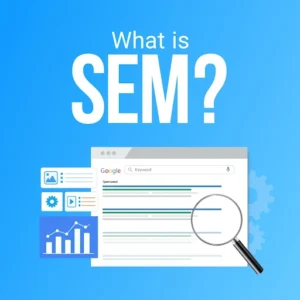
digital marketing explains that Search Engine Marketing refers to all marketing efforts that aim to increase the visibility of websites in search engine results pages (SERPs). This includes:
- Paid search advertising (paid placements / text ads etc.)
- Organic strategies (SEO — optimizing your site so that it ranks higher without paying for ads)
Often, people think SEM = paid search, but The Ultimate Guide to the 10 Most Effective SEM Methods in today’s search landscape shows that the more accurate view is that SEM is a broader umbrella: paid + organic methods.
hy Different Types MattWer
- Different types of SEM target different parts of the customer journey.
- Some methods deliver quick results; others build long‑term sustainable growth.
- Cost, complexity, scale, and required resources differ.
- A well‑rounded strategy often uses multiple types in combination, playing off strengths and offsetting weaknesses.
Major Types of Search Engine Marketing
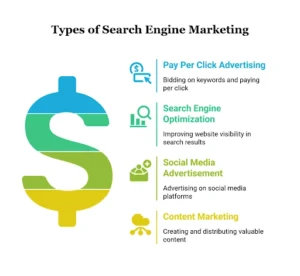
Here are the essential classifications, along with their details, upsides, and limitations.
Type |
What It Is / How It Works |
Advantages |
Disadvantages & Considerations |
| . Search Ads / Paid Search (PPC) |
Text ads that appear above or below organic search results when users search for specific keywords are one of the most common Types of SEM Marketing highlighted in modern advertising. Platforms like Google Ads and Bing Ads allow advertisers to bid on keywords; when someone searches, the ad auction determines which ads show and in what order based on bid amount and quality score. |
• Very fast visibility / almost immediate traffic once campaign is live.
• Highly targetable (by keywords, location, schedule, device etc.) • Highly measurable: you can track clicks, cost per click (CPC), conversion, ROI. • Great for capturing existing demand — meaning you connect with users who are already searching for your products or services. |
• Costs can increase significantly based on how competitive the keywords are.
• Requires ongoing management: bidding, ad copy, keyword selection, negative keywords etc. • Clicks do not always equal conversions — landing page, offer, user experience must be good. • Can be wasteful if targeting or budget not optimized. |
| . Search Engine Optimization (SEO) |
Optimising website content, structure, and off-page signals so that it ranks higher in organic (non-paid) search results is a core component within many Types of SEM Marketing covered in today’s search ecosystem. This includes on-page SEO, technical SEO, content creation, link building, and more. |
• Organic traffic is “free” in the sense you don’t pay per click (though you invest in effort).
• Can build long‑term authority and credibility. • Often more cost‑efficient over time. • Less dependent on continuous ad spend. |
• Takes time to see results — months in many cases.
• Requires continuous upkeep: content updates, algorithm changes, competition. • Some ranking factors outside your control (external links, algorithm shifts). • Harder to target urgent or highly time‑sensitive keywords rapidly. |
| . Local Search Marketing / Local SEO |
Targeting search results in a local geographical context is an essential strategy within certain Types of SEM Marketing highlighted in localized marketing. This includes optimizing Google My Business (or equivalents), local directory listings, maps, reviews, local citations, and improving visibility for “near me” searches. |
• Very effective for brick‑and‑mortar businesses or service providers in local regions.
• High relevance to users looking for something near them (“coffee shop near me”, “plumber in Malappuram” etc.) • Often lower competition and lower cost vs broader national/international keywords. • Good return‑on‑investment especially for in‑person sales. |
• Limited reach: mostly local traffic.
• Requires accurate business info, reviews, local citations etc. • Map ranking, local packs can be competitive. • Vulnerable to negative reviews or inconsistency in local listings. |
| . Shopping / Product Listing Ads |
For e-commerce, ads that display products (with image, price, store name, etc.) directly in search engine results are part of specific Types of SEM Marketing covered in digital retail marketing. Examples include Google Shopping campaigns, Microsoft Shopping, and similar platforms. |
• Very visual; helps users evaluate before clicking.
• Very good for conversion because user sees product details upfront. • Can drive high‑intent traffic – people searching with buying in mind. • Comparisons are easy; can leverage product feed optimizations. |
• Requires product feed management, good images, competitive pricing.
• Costs can be high in some verticals. • Complexity: inventory, shipping info etc need to be accurate; feed disapprovals can hurt. • Seasonality can shift competition/prices. |
| . Display Advertising / Display Network Ads |
Visual, banner, image, or video ads shown on partner websites, apps, and other platforms — often as part of display networks like Google Display Network — are included in broader Types of SEM Marketing explained in modern digital advertising. While these ads don’t appear directly in search results, they leverage context, remarketing, and interest-based targeting to reach the right audience. |
• Great for brand awareness or reach — showing your brand to many people, including those not actively searching yet.
• Supports remarketing: you can re‑show ads to people who visited your site before but didn’t convert. • Can be cheaper per impression; creative/ad design plays a big role. • Flexible formats (images, rich media, video). |
• Lower click‑through rates vs search ads.
• More wasted impressions if targeting isn’t precise. • Can be ignored by users (banner blindness). • Need good design and message for display ads to be effective. |
| . Video Advertising |
Ads shown in video content (e.g., YouTube) or before, during, or after video streams — or integrated within video networks — are part of evolving Types of SEM Marketing highlighted in digital marketing. These can be search-triggered video ads or use broader interest and behavioral targeting to reach the right viewers. |
• High engagement; video content often grabs attention more than static or text content.
• Good for storytelling, product demonstrations, brand building. • Can reach audiences that might not be reached via search or display only. • Increasing consumption of video makes this increasingly valuable. |
• Production costs can be higher.
• Measuring direct ROI may be harder (though platforms are improving). • Users may skip videos; view duration matters. • Targeting has to be good; video burn‑in can be lesser conversions vs search ads. |
| . Remarketing / Retargeting |
Showing ads to users who have already interacted with your site (e.g., visited, added to cart, etc.) but didn’t complete a desired action is a key strategy within certain Types of SEM Marketing featured in remarketing. This can be executed via display, search (in some cases), video, or social ad channels to re-engage potential customers and drive conversions. |
• Very effective in improving conversion, since the audience is already familiar or engaged.
• Helps recover lost sales. • Often shows higher ROI than broad reach campaigns. • Keeps brand top of mind. |
• Frequency capping needed to avoid overexposure / annoyance.
• Creative fatigue can set in; need to rotate or refresh creatives. • Users may view, ignore repeatedly — must optimize message + incentive. |
| . Programmatic Advertising |
Automated buying and placement of ads using algorithms and real-time bidding is explained in programmatic advertising. This approach fits within advanced Types of SEM Marketing and can include display, video, or other formats, where advertisers define audience, budget, and goals while the system handles bidding and placements across multiple publishers and networks. |
• Efficiency: less manual work, faster bid adjustments.
• Broad reach and ability to reach niche audience segments. • Can optimise for performance automatically (if set up well). • Real‑time adjustments possible. |
• Complexity: needs good data, good setup, good monitoring.
• Risk of wasted spend if targeting is off or placements low quality. • Lack of transparency in some programmatic networks. • Creative and message consistency can suffer if many variations. |
| . Native Advertising |
Ads that blend with the content of the platform — matching the look, feel, and function of the environment in which they appear (e.g., sponsored articles, recommendation widgets) — are covered in native advertising. While more common on publishers’ sites, these formats can also connect to certain Types of SEM Marketing when tied to search intent or content consumption. |
• Less intrusive; can feel more natural.
• Can offer higher engagement or trust because the ad looks like content. • Good for storytelling, education, influence. • Helps with brand credibility. |
• Sometimes users don’t realize it’s an ad — disclosure issues.
• Performance may be lower for direct conversion vs search ads. • Measuring impact can be more complex. • Creation costs and content quality expectations higher. |
| 1. Social Search Advertising / Cross‑Platform Keyword Targeted Ads (emerging/hybrid) |
Some platforms (e.g., social networks, eCommerce sites) allow search-like ad targeting using keywords or tags, or display ads when users search within their platforms. Integrating SEM with social paid campaigns also helps cover multiple touchpoints. While this is less “classic” SEM, it is becoming increasingly relevant and aligns with evolving Types of SEM Marketing. |
• Reaches people in more places than just Google/Bing.
• Useful for products which are often discovered via social / marketplace search. • Can amplify reach of your keyword‑targeted campaigns. |
• Platform differences in cost / targeting / measurement.
• Longer learning curve for some newer formats. • Potential overlap or duplication of spend if same audience targeted multiple ways. |
Emerging / Hybrid Types
Some newer or hybrid Types of SEM Marketing straddle these categories or combine several strategies, as explained in modern marketing. These approaches often leverage multiple channels and formats to maximize reach, engagement, and conversions.
-
Voice Search Marketing
: Optimizing for voice search (Alexa, Google Assistant) queries (which often are longer, more conversational). Ties with SEO and content (long tails, question phrases).
-
Featured Snippets / Zero‑Click Searches
: Optimizing content so that Google shows your answer directly in the result page (via snippets) or in “People also ask”, etc. Although you may not “pay” per click for this, it’s part of being seen in search.
-
Mobile Search Ads / App‑Install Search Ads
: Ads that promote apps (either to install or use) appear when users search from mobile. Also, app store search marketing is a thing.
-
Local Voice Search + Maps‑Centered Campaigns
: For example, “near me” + map pack + “open now” queries.
-
Dynamic Search Ads & Smart Campaigns
: These are paid ad formats (within PPC) that use more automation: dynamically generated from website content, auto targeting etc.
How These Types Fit Together / Integration
No single type of SEM is “best” in isolation. It emphasizes that effective strategies often mix several Types of SEM Marketing to cover different goals and maximise results.
.Short‑term results
(paid search, shopping ads) to capture intent and drive sales immediately.
.Mid‑term visibility & credibility
(SEO, content marketing) to build authority, presence, reduce dependency on paid spend.
.Brand visibility and audience reach (display, video, native) to introduce your brand to people who aren’t actively searching yet.
.Retargeting / remarketing
to follow up on site visitors, cart abandoners, or those who didn’t convert the first time.
.Local optimization
especially if you have physical presence / local service area.
Key Components / Elements Across SEM Types
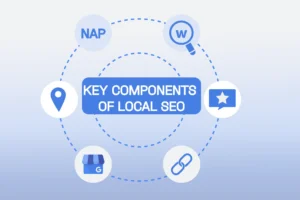
To manage any of these Types of SEM Marketing effectively, it highlights certain foundational components.
Keyword research
Identifying what people search (terms, long‑tail, questions).
Audience / user intent understanding
Are people looking to buy, learn, compare, etc.?
Ad copy / messaging
What you say (for ads) and how you present content matters.
Landing pages / user experience
For paid ads, the page where users land must be optimized. For SEO, the content must satisfy user intentBid & budget management: For paid campaigns: how much to bid, how to manage budgets, when to increase/decrease.
Tracking & analytics: Measuring clicks, impressions, conversion rate, cost per acquisition, ROI etc. Tools like Google Analytics, Google Ads reports, etc.Optimization & iteration: Testing ad creatives, adjusting keywords, optimizing site speed, refining targeting etc.
When to Use Which Type
Here’s guidance on when each type of SEM is generally most useful, as explained in the comprehensive breakdown of different Types of SEM Marketing, highlighting how each method supports specific goals.
| Business Situation | Types to Prioritize |
| New business / product launch wanting quick visibility |
For building awareness from day one, it recommends using different Types of SEM Marketing, including paid search ads, shopping ads, and display/video campaigns alongside SEO efforts. |
| E‑commerce store with many products | Shopping ads, Display + remarketing, SEO for product/category pages |
| Brick‑and‑mortar local business | Local SEO, Google My Business, local search ads, map pack optimization |
| Limited budget |
Focus on high-ROI Types of SEM Marketing such as tightly targeted paid search, Local SEO, content SEO, and low-cost display/remarketing. |
| Established brand with good organic presence |
Expand into additional Types of SEM Marketing such as display, video, remarketing, and possibly native ads, while maintaining SEO and using paid search selectively. |
Challenges & Limitations
 .Paid SEM can get expensive, especially in competitive verticals. Cost per click / cost per conversion may rise.
.SEO results are not guaranteed; search engine algorithms change.
-
- .Display and video may have lower conversion rates; message and creative must be strong.
- .Attribution complexity: people may see your display ad, then search and click paid, or find you organically. Assigning credit properly matters.
- .Ad fatigue, creative fatigue, competition saturating keywords or display placements. .Local SEO depends a lot on reviews, reputation. Negative feedback can hurt.
Best Practices & Tips
 1.Do thorough keyword research — both for paid and organic; understand long tail as well as volume keywords.
- 2.Optimize landing pages — speed, relevance, content, clear calls‑to‑action.
- 3.Use negative keywords (in paid campaigns) to avoid wasting spend.
- 4.Test ad creatives often: headlines, descriptions, images, formats
- .5.Segment campaigns / use audience targeting: location, device, time of day etc.
- 6.Optimize for mobile — mobile search behaviour and needs can differ.
- 7.Focus on metrics that matter — conversions, ROI, cost per acquisition — not just clicks or impressions. 8.Monitor competitor activity — keyword competition, ad copy, promotions.
- 9.Keep content fresh — for SEO: updated content, blogs, FAQs. For display/video/native: rotate creatives. 10,Use automation smartly — e.g. smart bidding tools, dynamic ads, responsive search ads. But always review, ensure there’s oversight.
-
Case Studies / Examples (Short)
-

- A small café in Malappuram optimizes its Google My Business listing, gets reviews, and appears in “coffee shop near me” local pack — foot traffic improves.
- An e‑commerce clothing retailer uses Shopping Ads + Remarketing Display to recover abandoned carts + drive sales during festival sales.
- A service business like plumbers or electricians uses paid search + local SEO to capture high intent searches like “emergency plumber near me”.
Conclusion
Search Engine Marketing is a multifaceted discipline, and today’s competitive landscape highlights the need to combine multiple approaches. When exploring the different Types of SEM Marketing, it becomes clear that from paid search and shopping ads to SEO, local search, and newer formats like native or video, each type has its own strengths. The best SEM strategies don’t rely on just one method—they integrate several to deliver immediate results, long-term growth, and broader audience reach.
To succeed:
- Understand your business goals
- Know your audience and how they search
- Allocate budget appropriately across SEM types
- Continuously test, monitor, and optimize
Types of SEM Marketing are not static — search engines evolve, user behaviour evolves, and formats evolve. The Ultimate Guide to the 10 Most Effective SEM Methods in modern marketing makes it clear that staying updated, understanding different types of SEM marketing, and remaining flexible are key to maintaining performance and staying competitive.
Author:Sabin
Freelace Digital Marketer In Tirur